
Germany Has a Fast Lane
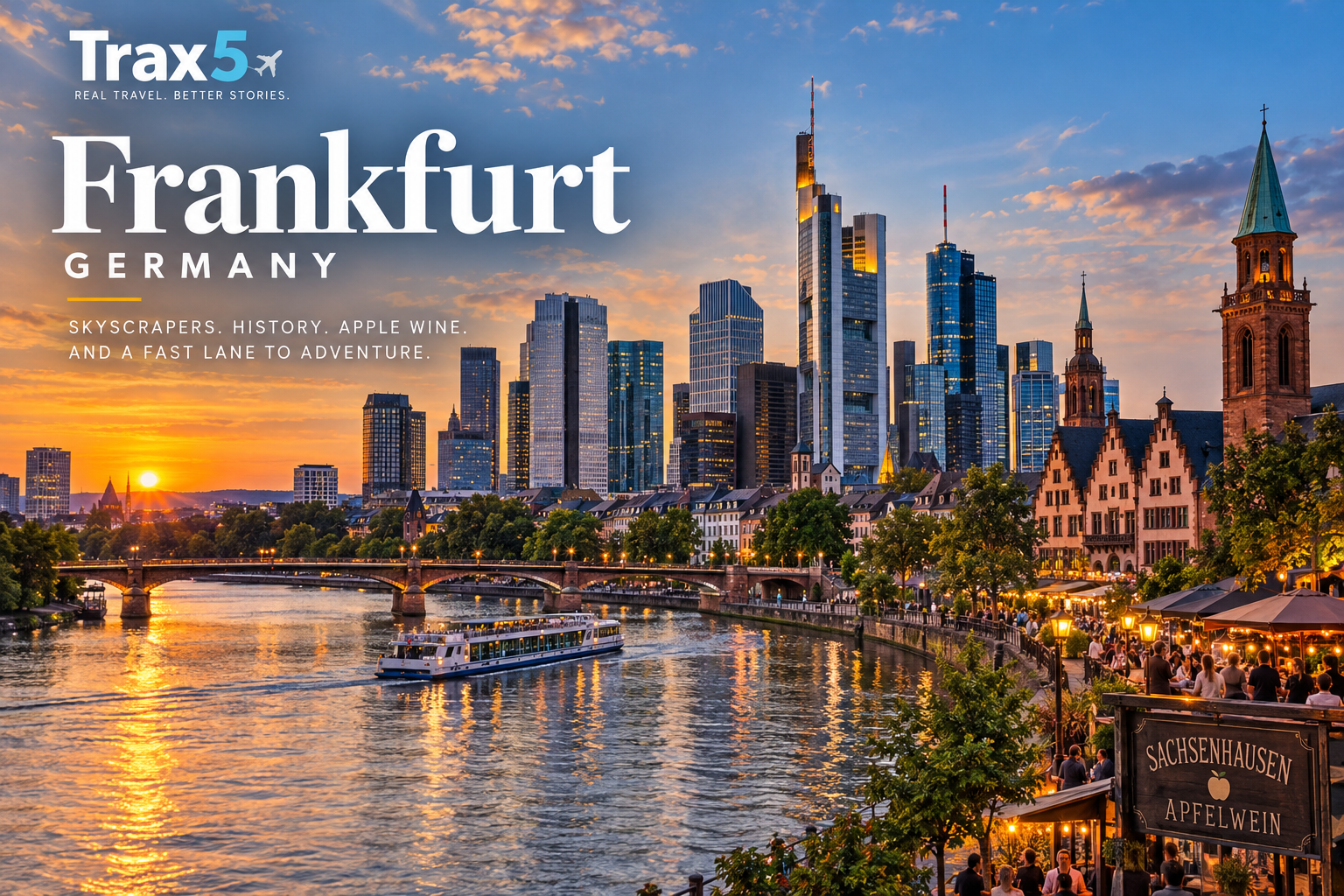
Frankfurt looks like Germany put its medieval square, banking towers, riverfront, apple-wine taverns and an unrestricted stretch of Autobahn into one carry-on — then pointed the road south toward Stuttgart and the Mercedes-Benz Museum.
Start Where Frankfurt Looks Least Like a Financial Capital
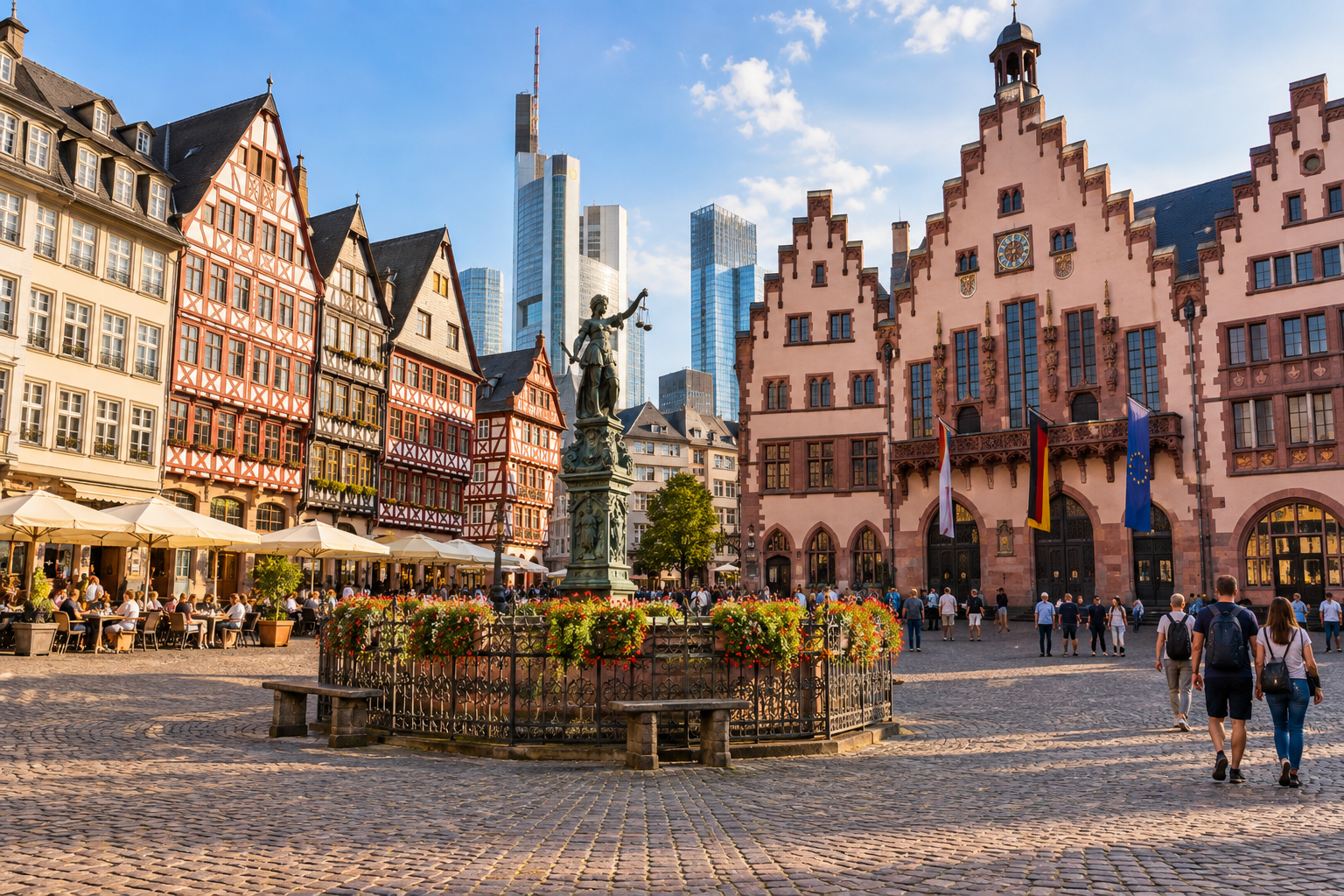
Begin at Römerberg, the historic square that immediately ruins the idea that Frankfurt is only glass towers and airport connections. The Römer — Frankfurt's historic city hall — faces a cobbled square framed by stepped gables, reconstructed half-timbered façades and the Fountain of Justice. Nearby, the cathedral and the lanes of the New Old Town compress centuries of German history into a walk that takes minutes rather than hours.
That contrast is Frankfurt's best opening trick. Look one direction and the city feels old enough for emperors. Turn a few blocks and office towers rise over the rooftops. Locals sometimes call the skyline Mainhattan, a playful combination of the Main River and Manhattan. It sounds like marketing until you see the towers behind the old town and admit the nickname works.
Do not rush Römerberg as a photo stop. Have a coffee, walk toward the cathedral, and let the streets narrow before the financial district starts pulling the city vertically again.
Then Walk Straight Into the Money
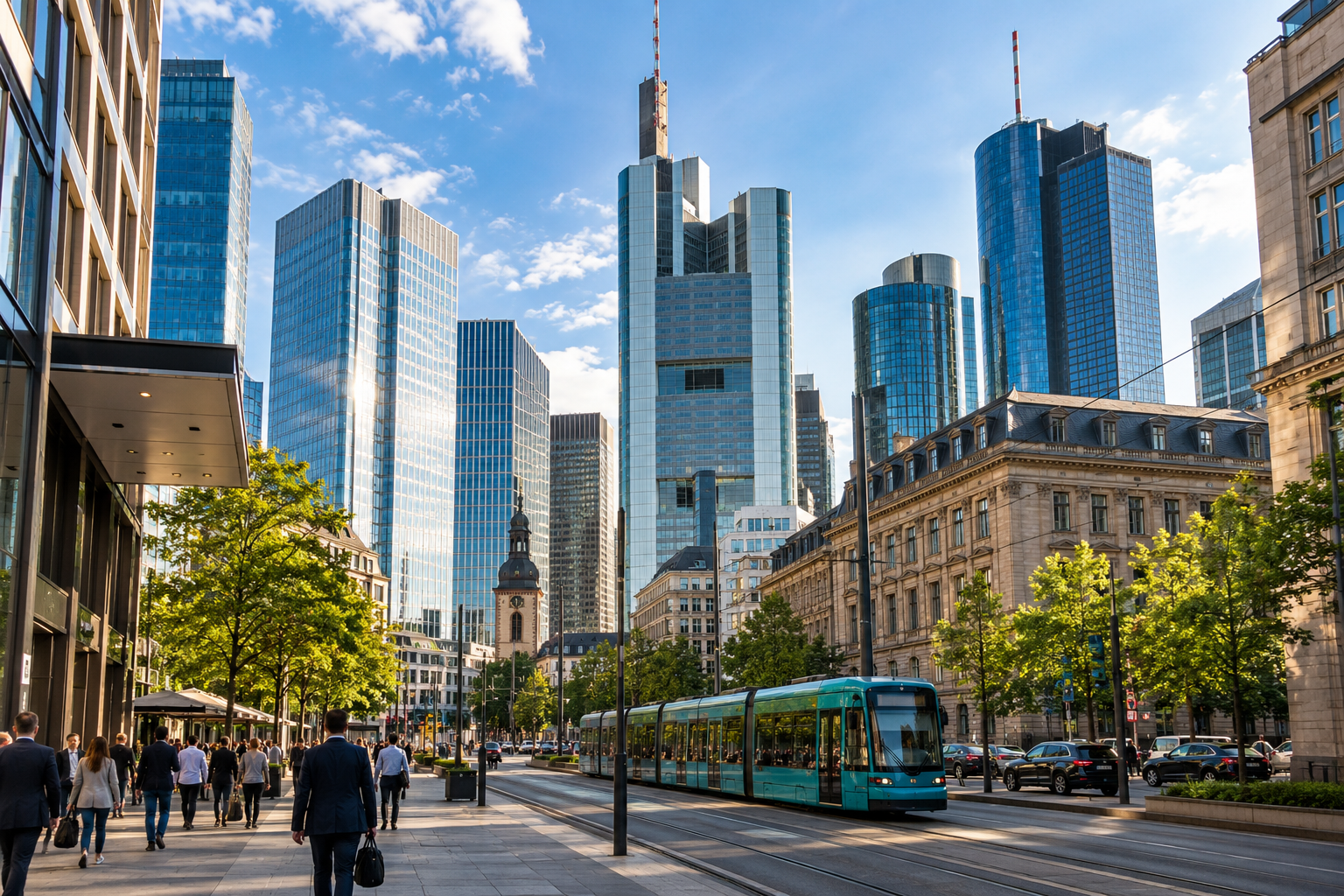
A short walk changes the set completely. Frankfurt is one of Europe's major financial centers, and the banking district announces itself with polished lobbies, tailored jackets, trams sliding between towers and glass façades reflecting other glass façades.
The fun is not pretending you have a meeting upstairs. It is watching two Frankfurts overlap. Historic stone buildings survive at street level while high-rises dominate the horizon. Cafés fill with office workers at lunch, bicycles thread through traffic, and the city's international character becomes obvious in the languages around you.
If you want the skyline from above, a public observation deck such as Main Tower can turn the geography into something readable: old town, river, rail station, neighborhoods and the green hills beyond. Suddenly Frankfurt feels compact rather than intimidating.
Cross the River Without Being in a Hurry
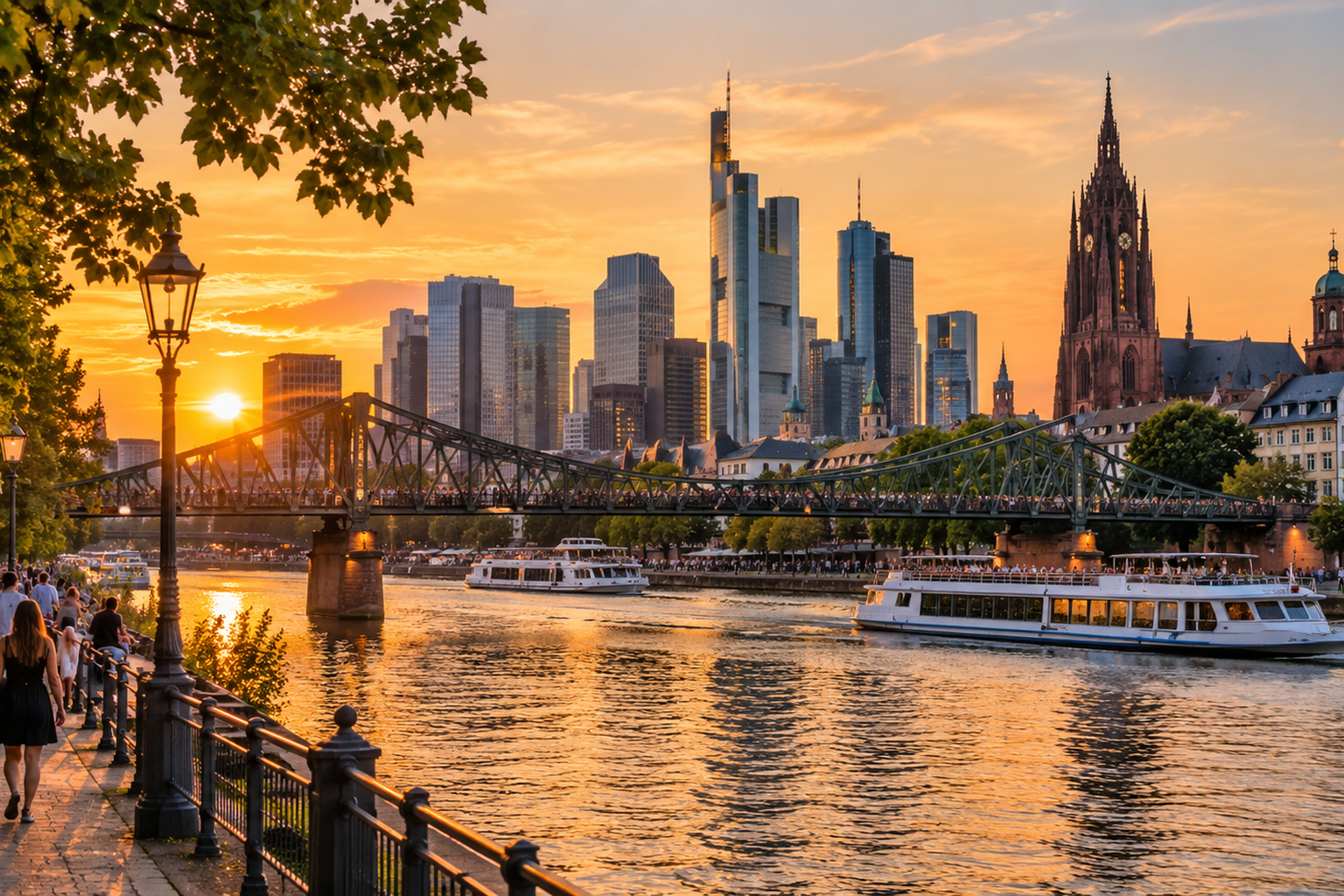
Late afternoon belongs to the Main. Walk the riverbank, watch excursion boats move through the city and cross the Eiserner Steg, the iron pedestrian bridge linking the center with Sachsenhausen. This is where Frankfurt stops feeling like a business trip and starts feeling like a weekend.
The river gives the skyline room to breathe. Joggers pass couples on benches. Cyclists ring bells behind distracted visitors. Museum buildings line the south bank, and the towers catch the last light across the water.
You can book a river cruise if you want the city delivered from a seat, but the free version is excellent: walk, cross, stop for the view, then continue toward Sachsenhausen as evening arrives.
Apple Wine Is Not Trying to Be Apple Juice
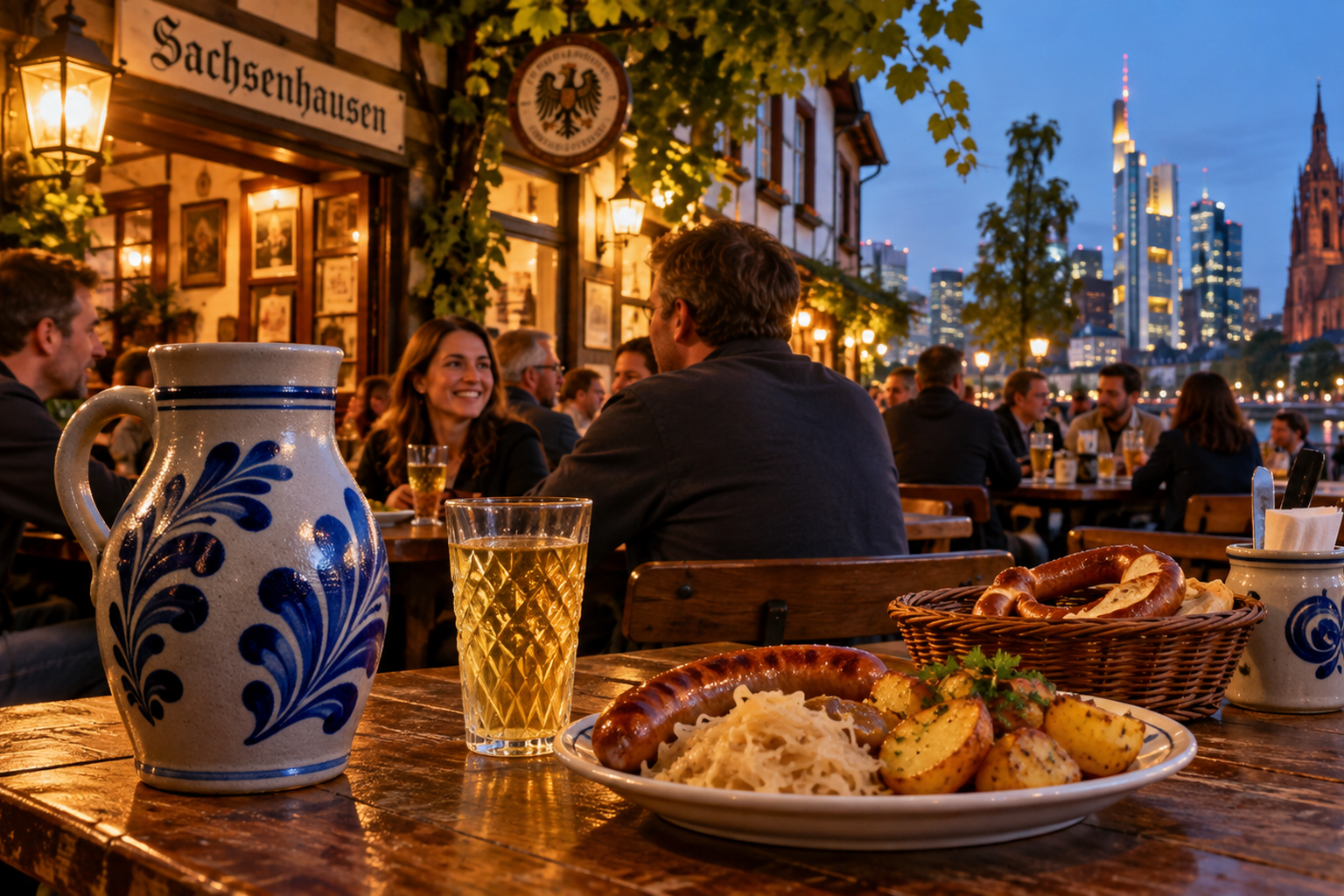
Sachsenhausen is where you meet Frankfurt's most famous local drink: Apfelwein, often called Ebbelwoi in the local dialect. It is fermented apple wine — dry, tart and much less sweet than many first-time visitors expect. It traditionally arrives in a blue-and-gray ceramic jug called a Bembel and is poured into a ribbed glass known as a Geripptes.
The proper setting is an apple-wine tavern with shared tables, hearty food and enough conversation that strangers stop feeling strange. Order one glass before committing to a heroic quantity. The first sip can make you wonder whether the apples are angry. The second usually makes more sense.
What matters is the ritual. This is not a cocktail engineered for visitors. It is a local tradition, and enjoying it in Sachsenhausen connects the modern international city to a very specific regional identity.
Order Something That Requires an Actual Appetite
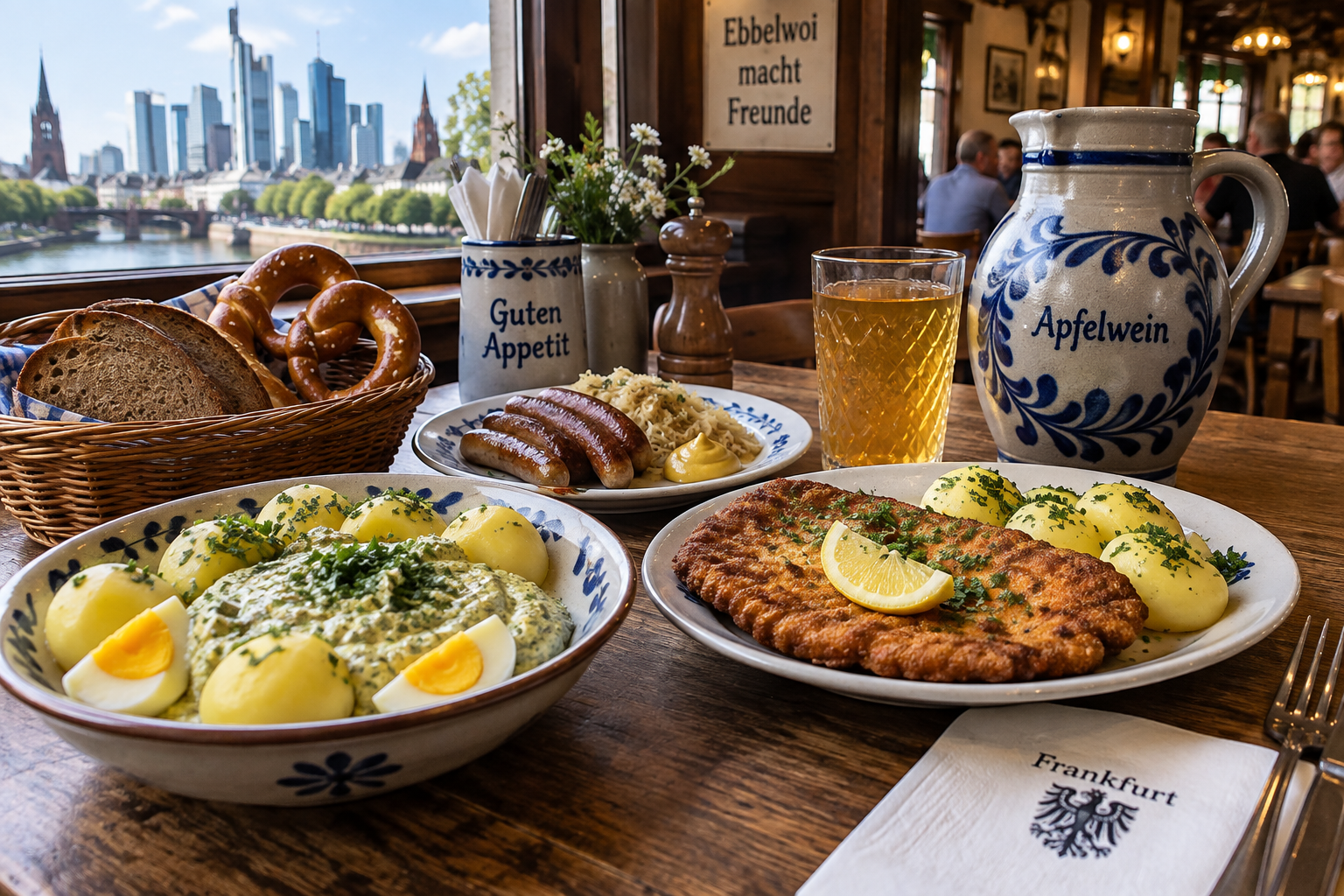
Frankfurt food is built for the moment when walking has stopped being cute. Try Frankfurter Grüne Soße — green sauce made from a traditional mixture of fresh herbs, usually served cold with potatoes and eggs and sometimes alongside meat. Add sausages, schnitzel, bread, mustard or a pretzel and the table becomes very German very quickly.
Ask what is regional rather than simply ordering the most recognizable dish on the menu. A good server can steer you toward seasonal specialties, and an apple-wine tavern is one of the easiest places to eat something tied specifically to Frankfurt and Hesse rather than a generic idea of German cuisine.
And do not be stingy with the experience. You flew to Germany. If one traditional dinner costs a little more than a supermarket sandwich, this is exactly the sort of travel expense worth remembering.
Frankfurt After Dark Has More Than One Personality
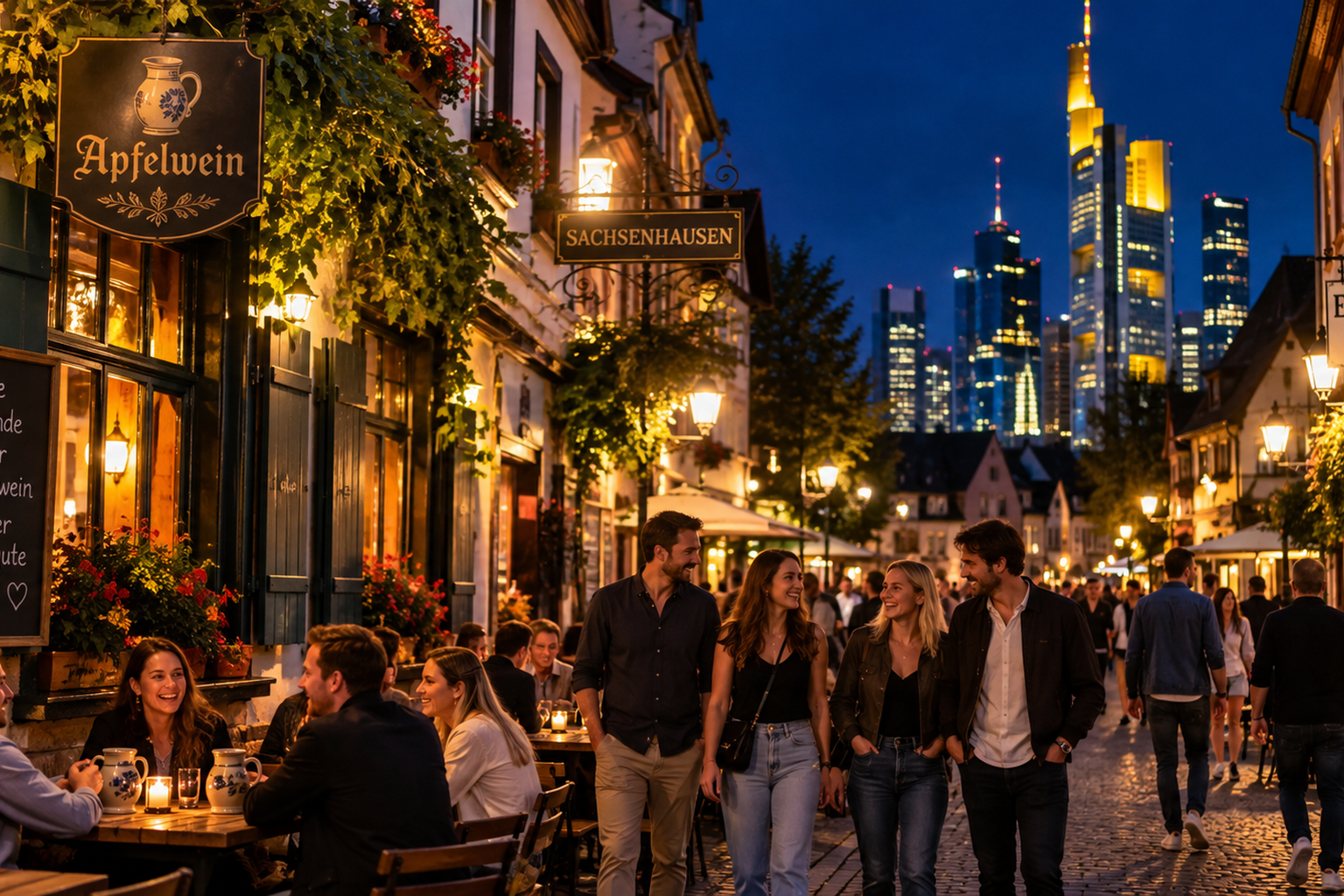
At night, Sachsenhausen's taverns and bars get louder while other parts of Frankfurt offer cocktail bars, clubs, restaurants and late-night international energy. The city is not Berlin and does not need to imitate it. Frankfurt nightlife feels more compact: dinner can become drinks, drinks can become music, and the river is never far away when you need air.
Old Sachsenhausen can be lively and occasionally rowdy, especially on weekends. Enjoy the atmosphere without turning your common sense off. Keep track of your belongings, know how you are getting back, and remember that the best night is the one you can still describe at breakfast.
A simple German Prost! means “cheers.” Make eye contact when clinking glasses — a small custom that is easy to follow and far more useful than pretending your German is fluent after two apple wines.
The Autobahn Is an Experience, Not a Dare
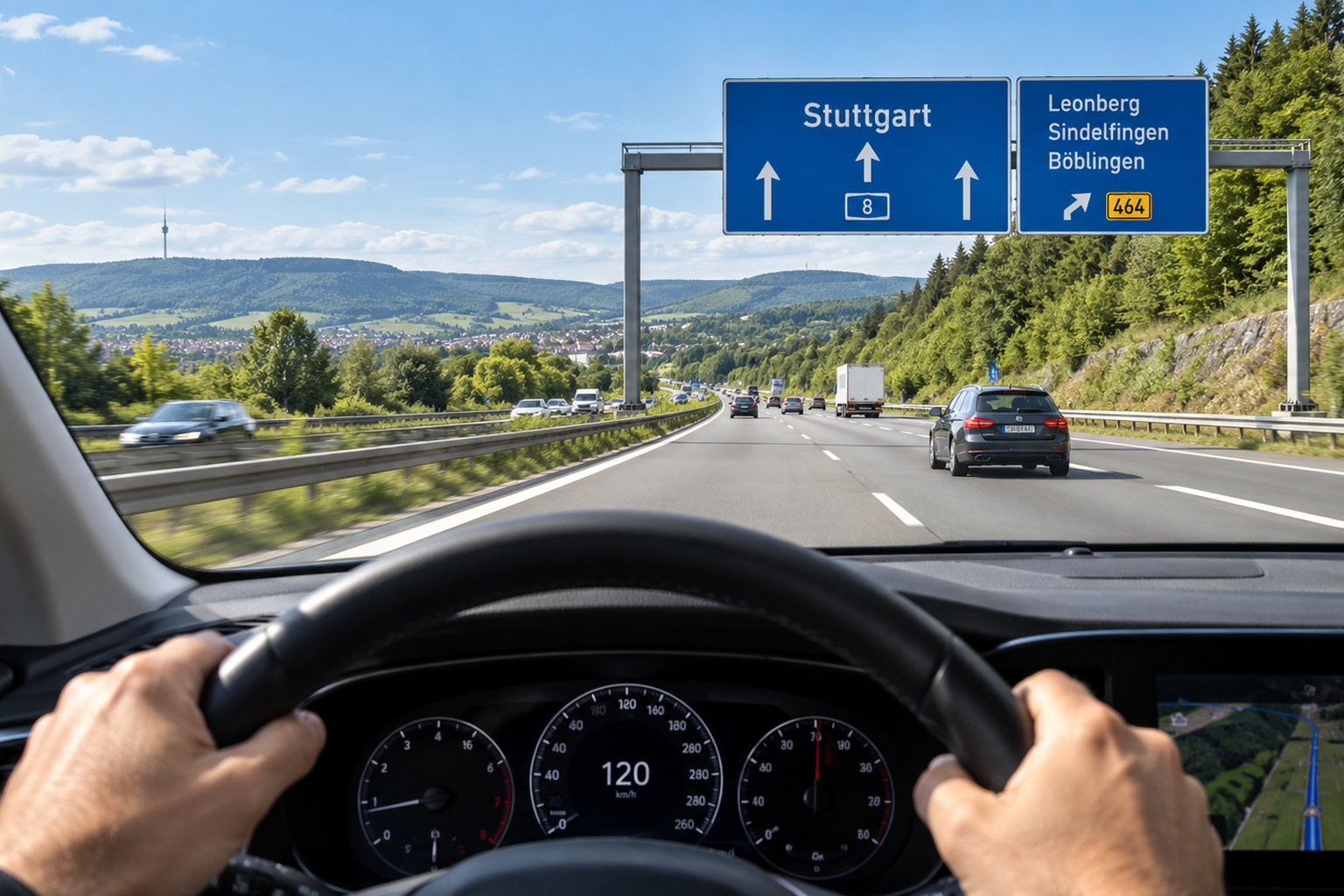
Then comes the road-trip chapter. Pick up a suitable rental car and point south toward Stuttgart. Germany's Autobahn network is famous because some sections have no general speed limit for passenger cars, but that does not mean every section is unrestricted or that driving as fast as possible is the objective. Posted limits, construction zones, traffic and weather always control the real experience.
The cultural rule that matters most is lane discipline. Keep right except when overtaking, check mirrors carefully, signal early and never assume the left lane is empty just because it was empty two seconds ago. Cars can approach quickly. If you are unfamiliar with high-speed motorway driving, there is no prize for matching the fastest driver.
The memorable part is the engineering rhythm: smooth motorway, disciplined passing, service areas, forested hills and German towns appearing on blue signs. Frankfurt has given us the city. Now Germany gives us the road.
End the Drive Inside the Mercedes-Benz Story
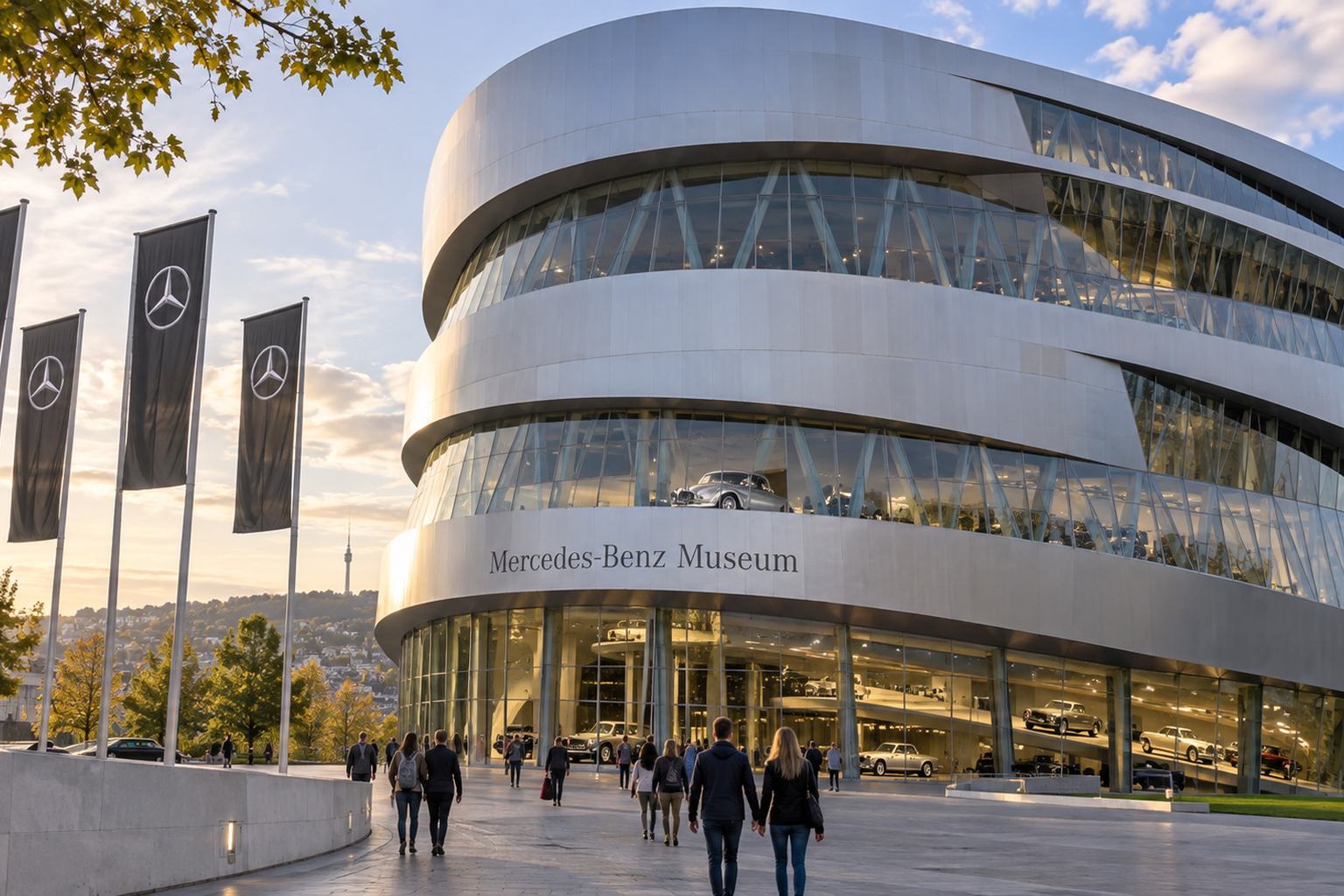
Stuttgart gives the road trip a destination worthy of the drive: the Mercedes-Benz Museum. Its exhibits trace the automobile from the earliest motor-car era through racing, engineering, design, commercial vehicles and the machines that turned a German invention into a global industry.
You do not need to be a car fanatic. The museum works as industrial history. Cars become markers of changing technology, society, travel, war, prosperity, competition and design. For anyone who does love cars, however, budget extra time because “I'll just look at this one” is how an afternoon disappears.
Frankfurt to Stuttgart also changes the shape of the story. Instead of another European itinerary ending with a cathedral and dessert, this one leaves the old square, crosses a financial capital, drinks the local cider, takes the open road and finishes inside one of Germany's great automotive institutions.
The Best Frankfurt Memory Is the Contrast
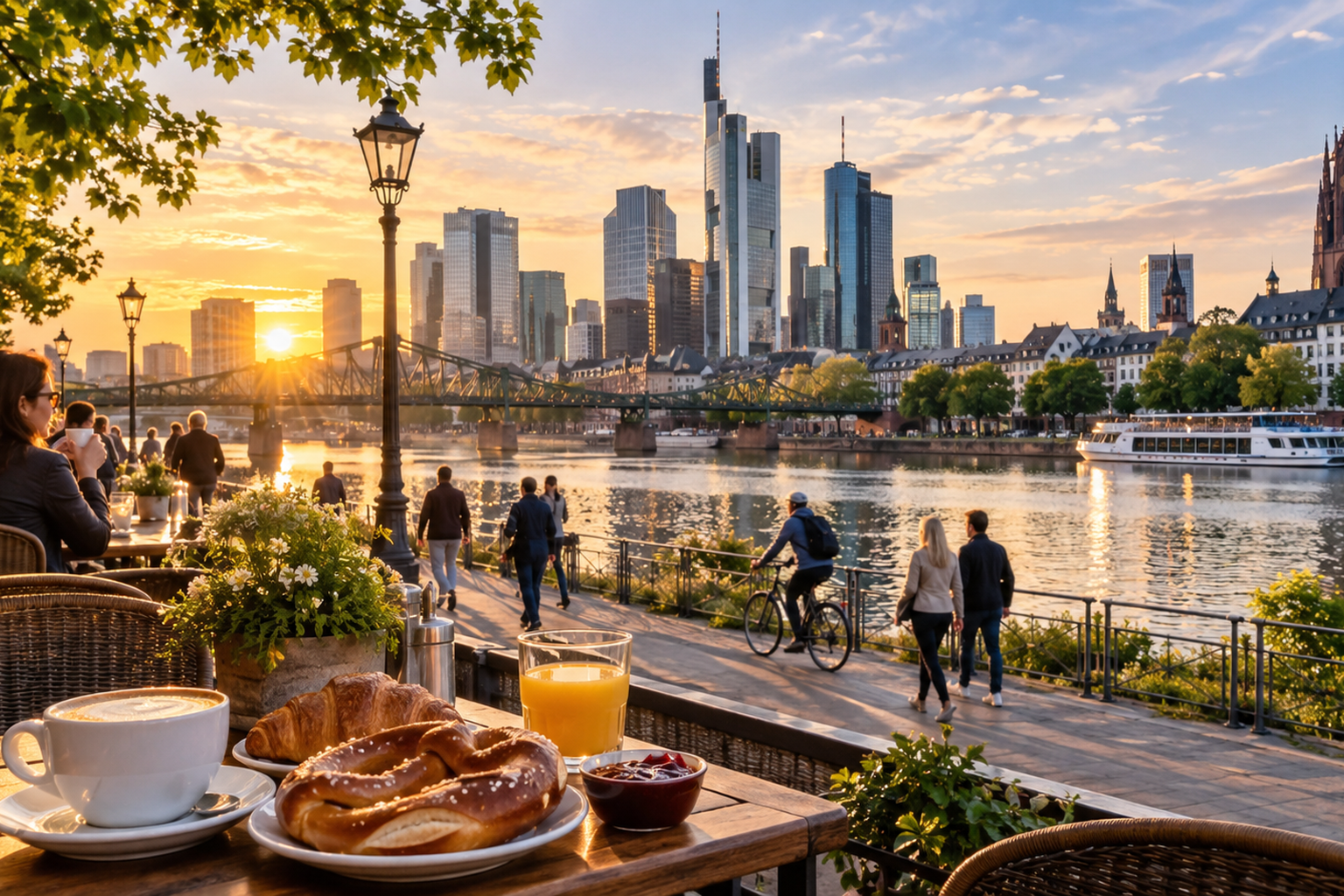
Whether you loop back to Frankfurt or simply replay the first days from Stuttgart, the city becomes easier to understand after the road trip. The skyscrapers were real, but they were never the whole story. Neither were Römerberg, apple wine or the river.
Frankfurt works because the contrasts are close enough to experience in one day: banker and bartender, cathedral and tower, museum and tavern, business lunch and green sauce, pedestrian bridge and Autobahn. You can arrive expecting an efficient stopover and leave wondering why you treated it like one.
So have one more coffee by the Main if the schedule allows. Watch a boat pass. Look back at the skyline. Germany has a fast lane, yes — but Frankfurt is better when you occasionally get out of it.
Frankfurt, the Autobahn & Stuttgart
Give Frankfurt enough time to become more than an airport stop, then add a road-trip day to Stuttgart for the Mercedes-Benz Museum.
Römerberg & the Skyline
Explore the old town, cathedral area and financial district, then finish with a skyline view and dinner.
The Main & Sachsenhausen
Walk the river and Eiserner Steg, explore the museum bank area, then settle into an apple-wine tavern.
Frankfurt Food & Nightlife
Keep the day flexible for markets, museums or neighborhoods, then enjoy local food and a relaxed night out.
Autobahn to Stuttgart
Drive south responsibly, allow extra time for traffic and stops, and make the Mercedes-Benz Museum the day's anchor.
Stuttgart or Return
Explore more of Stuttgart or return toward Frankfurt depending on your flight plan and rental-car arrangements.
Build Your Frankfurt Trip
Everything you need to plan, book and enjoy your Frankfurt escape.
Book Flights
Compare flights to Frankfurt Airport (FRA) and find the route that works best for your trip.
SEARCH FLIGHTS →Find the Best Stays
Find and compare hotels and other places to stay in Frankfurt.
EXPLORE STAYS →Book Top Experiences
Discover Frankfurt city tours, food experiences, river activities and other memorable experiences.
EXPLORE EXPERIENCES →Travel Essentials
Search Amazon for useful travel essentials for your trip.
SEARCH ESSENTIALS →ⓘ As an Amazon Associate I earn from qualifying purchases.
A Few Things Worth Knowing in Frankfurt
Greetings are generally straightforward and punctuality is appreciated. Use marked crossings, respect bicycle lanes and keep noise reasonable in residential areas. A few German words help: Guten Tag means good day, Danke means thank you and Prost means cheers.
Restaurant service is normally included in menu prices, but rounding up or leaving roughly 5–10% for good table service is common. Tell the server the total amount you want to pay when handing over cash or paying at the table rather than leaving money silently and walking away.
Busy stations, nightlife areas and major visitor zones deserve normal city awareness. Keep valuables secure, confirm taxi or ride arrangements and do not assume every place accepts every card. Apple wine is alcoholic even when it tastes lighter than expected, so pace yourself.
For the Autobahn, follow posted limits and electronic signs, keep right except to pass, never stop on the motorway except for a genuine emergency and check rental-car rules before crossing regions or returning the vehicle in another city. Train service is an excellent alternative if you do not want to drive.
Frankfurt rewards travelers who stop treating it like a connection. Spend reasonably on the things that make the trip memorable — a good local meal, a river experience, a comfortable stay, a museum ticket or the right rental car. Relax, smile, drive responsibly and have fun. The point is not to race through Germany; it is to enjoy what the road connects.
Frankfurt was only one wrong turn.
There are plenty more. Choose another Trax5 story and see where you end up.