
Where Every Road Becomes a Prayer

Makkah is not a sightseeing city with a sacred landmark added to the itinerary. For Muslim travelers, worship is the itinerary — and everything else, from mountain roads and Hijazi food to market conversations and late-night walks, happens around that center.
The City Narrows Toward One Sacred Center

Your first walk toward Al-Masjid al-Haram — the Grand Mosque — changes the scale of the trip. Streets that looked ordinary a few minutes earlier begin filling with worshippers from every direction. White ihram garments, black abayas, family groups, wheelchairs, prayer bags and hotel key cards all move toward the same place.
Then the Kaaba appears. Muslims call it the House of Allah, or God's House, not because God is believed to live inside a building, but because the Kaaba is the sacred direction of prayer and the center toward which Muslims around the world face five times each day.
Makkah is open only to Muslim visitors in the sacred area, and the city should be approached accordingly: not as a backdrop for travel content, but as a place of worship, humility and shared devotion.
Tawaf Turns a Crowd Into a Single Movement

Tawaf is the ritual of circling the Kaaba seven times counterclockwise. From an upper level, the movement looks almost impossibly smooth: thousands of people becoming one current around a fixed center.
Down on the marble, the experience is more human. Families keep each other together. Older pilgrims move carefully. People make dua — personal supplication or prayer — in dozens of languages. Someone may be crying quietly. Someone else may be helping a stranger.
If you are performing Umrah, learn the sequence before you arrive and rely on official guidance for current permit or access requirements. Once the rites begin, the best approach is not to rush for the perfect moment. Let the worship itself be the moment.
Makkah Measures Time Differently

In Makkah, the day naturally organizes itself around prayer. Hotel elevators fill before salah. Restaurants empty and refill. Corridors, courtyards and streets change direction as worshippers move toward the Haram and then disperse again.
Between prayers, drink Zamzam water, rest, read, eat lightly and resist the urge to turn every hour into another excursion. Zamzam is the sacred well associated in Islamic tradition with Hajar and her son Ismail. For many pilgrims, drinking it is both practical hydration and a deeply meaningful act.
This rhythm is part of the spirituality of Makkah. The city teaches repetition without monotony: prayer, walking, water, rest, another prayer — each return carrying a slightly different feeling.
Jabal Al-Nour Changes the View

Jabal Al-Nour, the Mountain of Light, rises sharply above Makkah. Near its summit is the Cave of Hira, traditionally associated with the first Quranic revelation received by Prophet Muhammad.
The climb is steep and exposed. Do not treat it like an easy photo stop. Go only if your health, weather conditions and current access guidance make sense. Carry water, wear real walking shoes, and understand that the significance of the place matters more than reaching the top quickly.
For a gentler cultural experience, the Hira area below the mountain offers ways to learn more about the story of revelation and the historical landscape without making the full ascent.
Outside the Center, the Story Expands
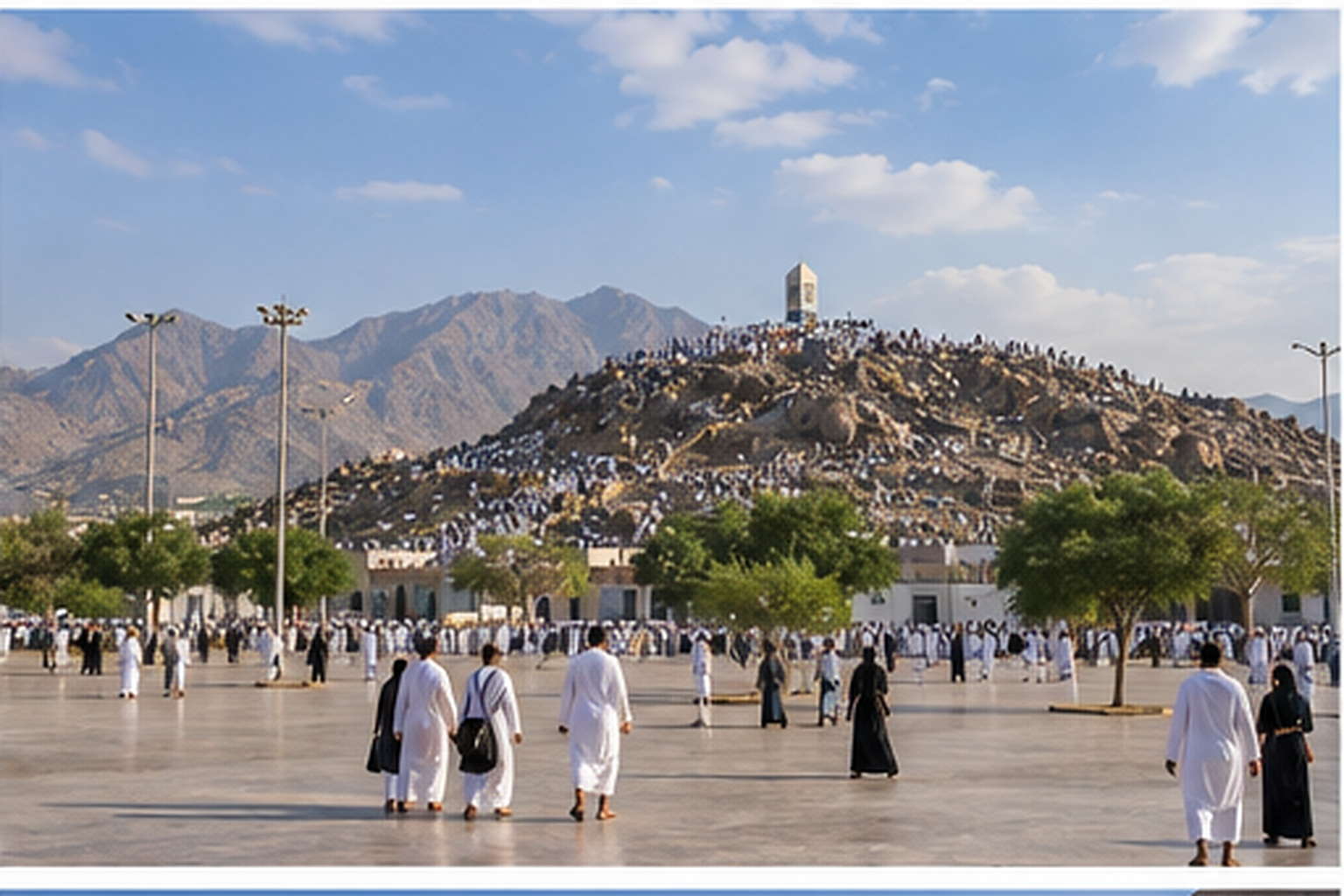
Leave central Makkah and the geography of Hajj begins to make physical sense. Mina, Arafat and the surrounding valleys are not abstract names once you see the roads, tent areas and mountains that connect them.
Mount Arafat is central to the Hajj pilgrimage, while Mina becomes a vast temporary city during Hajj. Outside the peak season, a guided visit can add historical and spiritual context without trying to recreate rituals that belong to their proper time.
The roads also show another side of the region: mountain corridors, outlying communities, local shops and quieter districts beyond the towers around the Haram. This is where Makkah's Hijazi identity — the culture of western Saudi Arabia — feels more visible in everyday life.
Hijazi Food Makes the City Feel Human Again

After hours of walking and worship, food becomes wonderfully simple. Look for ful, slow-cooked fava beans eaten with bread; tamees, a large flatbread often served hot from the oven; and mutabbaq, a folded griddled pastry commonly filled with egg, vegetables and sometimes meat.
For a heavier meal, rice dishes with chicken or lamb are everywhere. In the Hijaz, you may also encounter saleeg, a creamy rice dish traditionally served with meat or chicken. Finish with dates, Arabic coffee — often called qahwa — or fresh juice.
Makkah has fed pilgrims for centuries, so the food culture is unusually international. You may eat Saudi food at lunch, Indonesian food at dinner and South Asian breakfast the next morning without leaving the same neighborhood.
Souvenirs Mean More When They Carry a Memory

Markets and shopping streets around Makkah sell the practical and the sentimental side by side: dates, prayer mats, Qurans, modest clothing, miswak chewing sticks used for oral cleaning, prayer beads, perfume oils and gifts for family waiting at home.
Oud — fragrant wood or perfume based on agarwood — is especially common across the Gulf and can range from inexpensive blended scents to serious luxury. Ask before sampling, compare prices, and do not assume every shop sells the same quality.
The best market interaction is rarely a hard negotiation. Be polite, ask questions, and remember that many sellers are serving visitors from dozens of countries every day. A simple shukran means thank you; as-salamu alaykum is the familiar greeting meaning peace be upon you.
The Quietest Memory May Arrive in the Busiest Place

Makkah does not really close at night. Pilgrims continue walking, eating, praying and returning to hotels long after midnight. The marble around the Haram cools. The lights sharpen. Families move more slowly. Someone buys tea. Someone opens a prayer book. Someone simply sits.
This is where the story becomes less about what you saw and more about what you felt. The towers, crowds and logistics fade behind the reason people came: worship, forgiveness, gratitude, reflection and a sense of belonging to something much larger than one trip.
Leave one late evening unplanned. Pray. Walk. Sit. Drink water. Watch the human tide move toward the Kaaba again. In a city visited by millions, one of the most powerful moments can still feel completely private.
A Four-Night Makkah Journey
Build the trip around worship first, then add Islamic history, Hijazi food and one carefully paced visit beyond the central Haram area.
Arrive & Center the Trip
Transfer from Jeddah, settle in near the Haram, rest and make worship the only real priority for the first evening.
Umrah & a Slower Afternoon
Complete the rites at a sustainable pace, hydrate, rest and return to the Haram later when the body has recovered.
Islamic History Beyond the Center
Visit Jabal Al-Nour or its cultural district, then include Arafat and Mina with a reputable guide if access and conditions permit.
Food, Gifts & One Last Night
Eat a proper Hijazi meal, shop for meaningful gifts, keep the schedule light and finish with an unhurried night at the Haram.
Build Your Makkah Trip
Everything you need to plan, book and enjoy your Makkah escape.
Book Flights
Compare flights to Jeddah (JED), the main international gateway for Makkah.
SEARCH FLIGHTS →Find the Best Stays
Find and compare hotels and places to stay in Makkah, including options near Al-Masjid al-Haram.
EXPLORE STAYS →Book Top Experiences
Browse guided experiences and historical tours for your Saudi Arabia trip.
EXPLORE EXPERIENCES →Travel Essentials
Search Amazon for useful travel essentials for long walking days, airport transfers and everyday trip basics.
SEARCH ESSENTIALS →ⓘ As an Amazon Associate I earn from qualifying purchases.
A Few Things Worth Knowing in Makkah
Makkah is Islam's holiest city and the Haram is reserved for Muslims. Dress modestly, protect the atmosphere of worship, keep voices low near prayer areas and ask before photographing people. Do not treat worshippers as scenery for social media.
Tipping is appreciated but not as rigidly expected as in some countries. Round up or leave a modest amount for helpful drivers, hotel staff, porters and guides. In restaurants, check the bill before adding anything extra.
The biggest hassles are usually crowds, unofficial offers, traffic delays and confusion during peak periods rather than aggressive tourist scams. Use official transport or reputable ride services, confirm prices before private services and ignore anyone pressuring you into unnecessary purchases or unofficial access.
Entry, permit and crowd-control rules can change by season, especially around Ramadan and Hajj. Check the latest official Saudi and Nusuk guidance before travel. Carry water, comfortable shoes, a small prayer bag, phone power and patience, and allow generous time around prayer periods.
Spend reasonably on what genuinely improves the pilgrimage — a comfortable location, safe transportation, a knowledgeable guide and meals that keep you well. Then relax, smile, be generous with people around you and leave enough unscheduled time for the reason you came: worship.
Makkah was only one wrong turn.
There are plenty more. Choose another Trax5 story and see where you end up.