
The Silk Road Was Showing Off

The first look at Registan feels almost unfair. Three monumental madrasas face a square, blue tiles catch the light, and every doorway seems determined to outdo the last. The Silk Road Was Showing Off—and Samarkand still knows how to make an entrance.
Follow the spectacle into tiled lanes, a lively bazaar and a generous plate of plov. Between the grand buildings, leave room for tea, ordinary conversation and the pleasure of looking twice.
Let Registan Stop You in Your Tracks
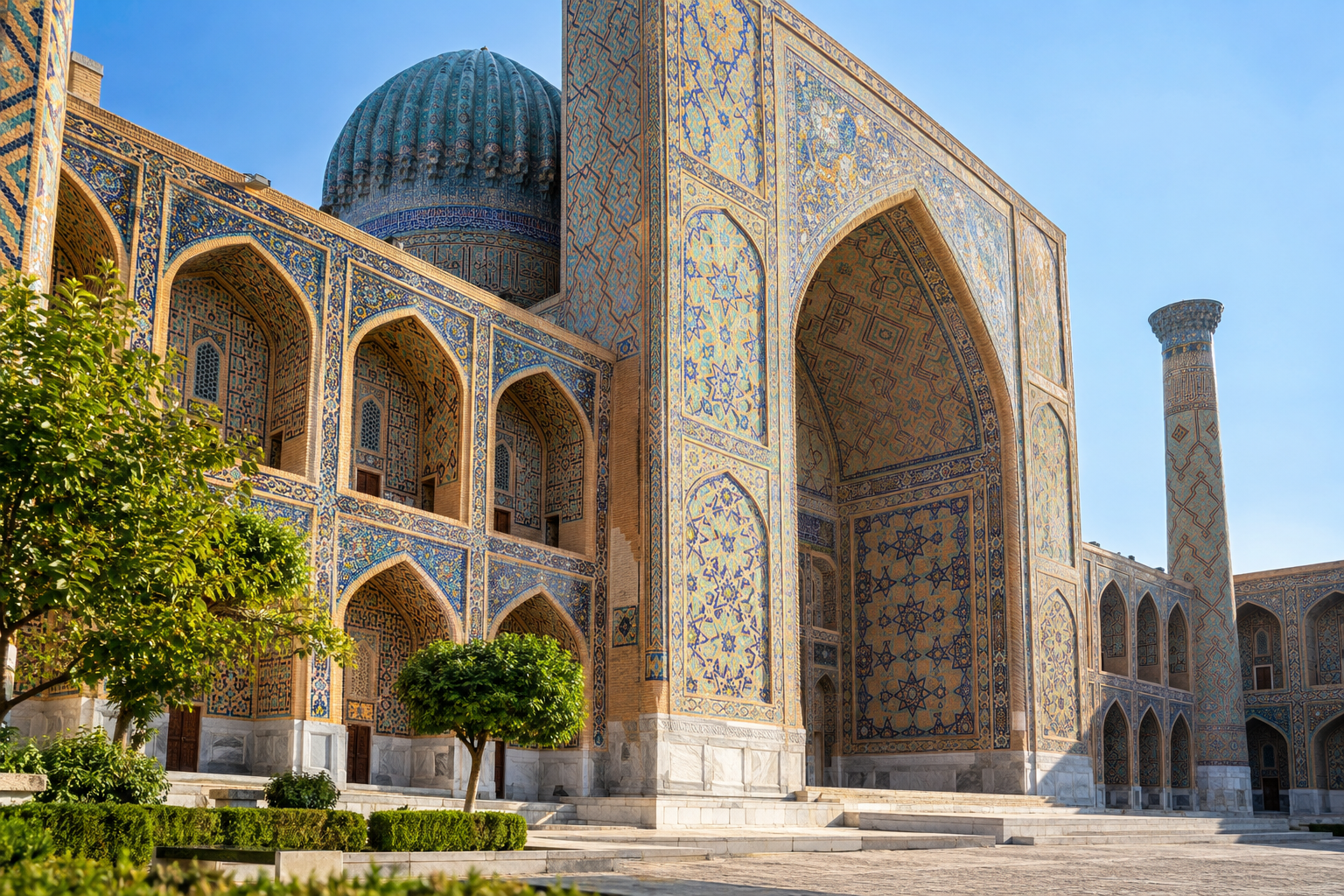
Start with the wide view. Registan brings together the Ulugh Beg, Sher-Dor and Tilla-Kari madrasas, each with its own way of turning brick, proportion and tile into drama. The square once belonged to a city shaped by Silk Road exchange; today it makes a compelling first page for your visit.
Walk closer and the scale changes. Patterns that read as blue from a distance become stars, flowers and tiny arrangements of color. Give the courtyards time, and consider a local guide to explain the different buildings rather than treating the ensemble as one enormous photo stop.
Check current entry arrangements at the official ticket point. Return toward evening for a different light, but keep your first visit unhurried: this is a place to stand still before you start collecting pictures.
Walk Slowly Through Shah-i-Zinda
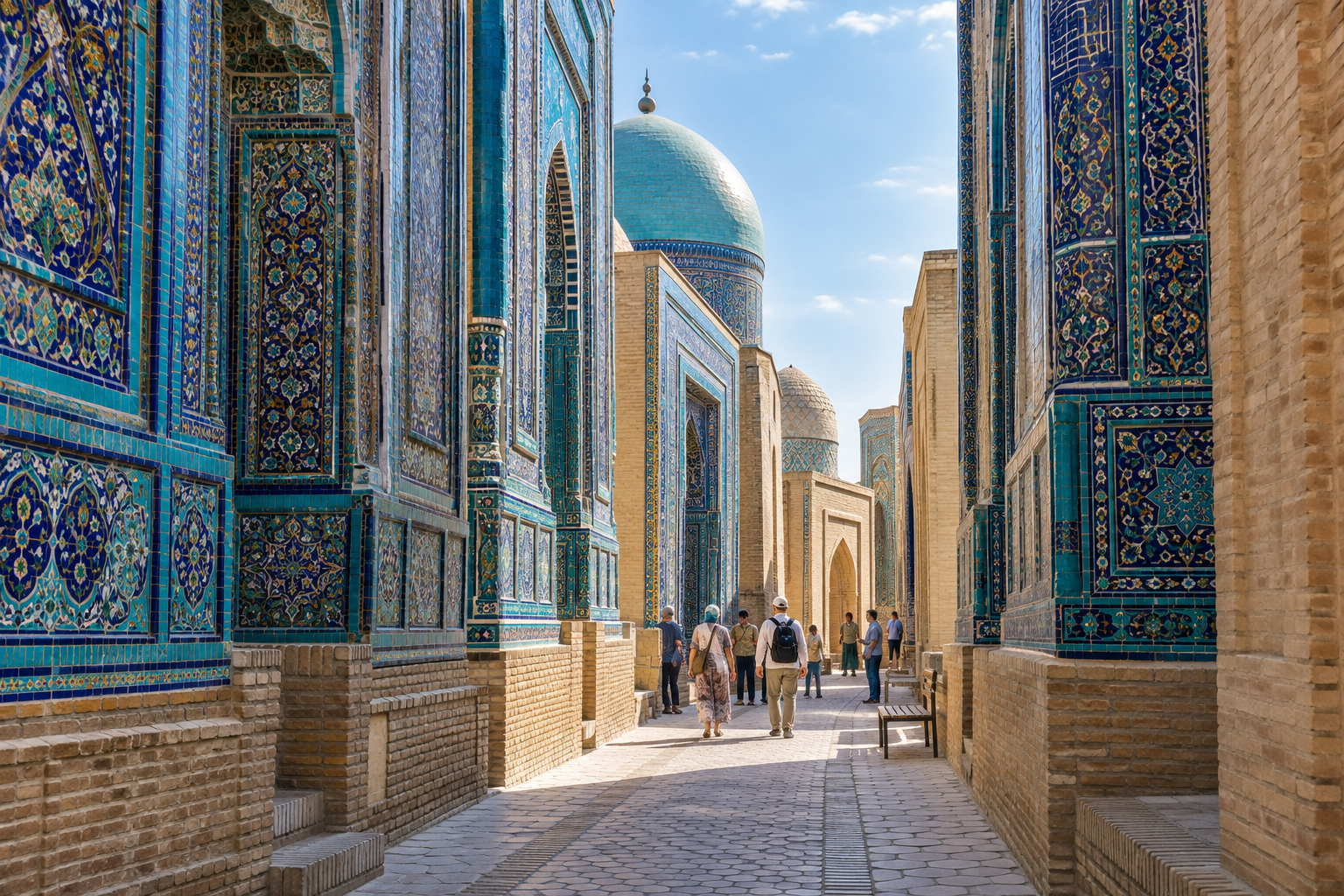
At Shah-i-Zinda, the grandeur draws closer. A passage climbs between mausoleums whose tiled fronts seem to compete in shades of turquoise, cobalt and deep blue. Each few steps reveal another surface worth studying.
This is a necropolis and a place of reverence as well as an architectural highlight. Dress modestly, keep your voice low and give worshippers space. Follow local guidance about head coverings, entry and photography; a quiet pause belongs here as much as a camera does.
Look for the small details: a carved edge, a repeating flower, a patch of glaze catching the sun. The corridor is memorable because of its scale and because it rewards attention at arm’s length.
Look Up at Bibi-Khanym

Bibi-Khanym changes the scale again. Its monumental forms make the people crossing the courtyard look small, and the combination of brick, tiled portals and turquoise domes gives the skyline another unmistakable silhouette.
The mosque is associated with the era of Amir Timur. Its fabric has weathered, changed and been restored over time; ask a guide about that history instead of imagining every surface has remained untouched for centuries.
Keep to permitted areas and respect barriers. Then take a break before the next stop. Nearby Siyob Bazaar brings you from imperial ambition into the wonderfully practical question of what to eat.
Follow the Bread Into Siyob Bazaar

Near Bibi-Khanym, Siyob Bazaar trades monumental silence for conversation. Round loaves of Samarkand bread sit beside dried fruit, nuts and sweets. There are errands being done here, not just souvenirs being sold, and that everyday rhythm is part of the attraction.
Start with a greeting and ask before photographing a vendor closely. Check the price, weight and currency before buying; if you negotiate for a souvenir, keep it friendly. Food stalls deserve the same common sense you would use anywhere: look for fresh handling and busy turnover.
Buy a little bread or fruit, keep small notes handy and take your time. The Silk Road story becomes easier to imagine when you stop thinking only about monuments and notice the exchange happening across a counter.
Make Room for Samarkand Plov
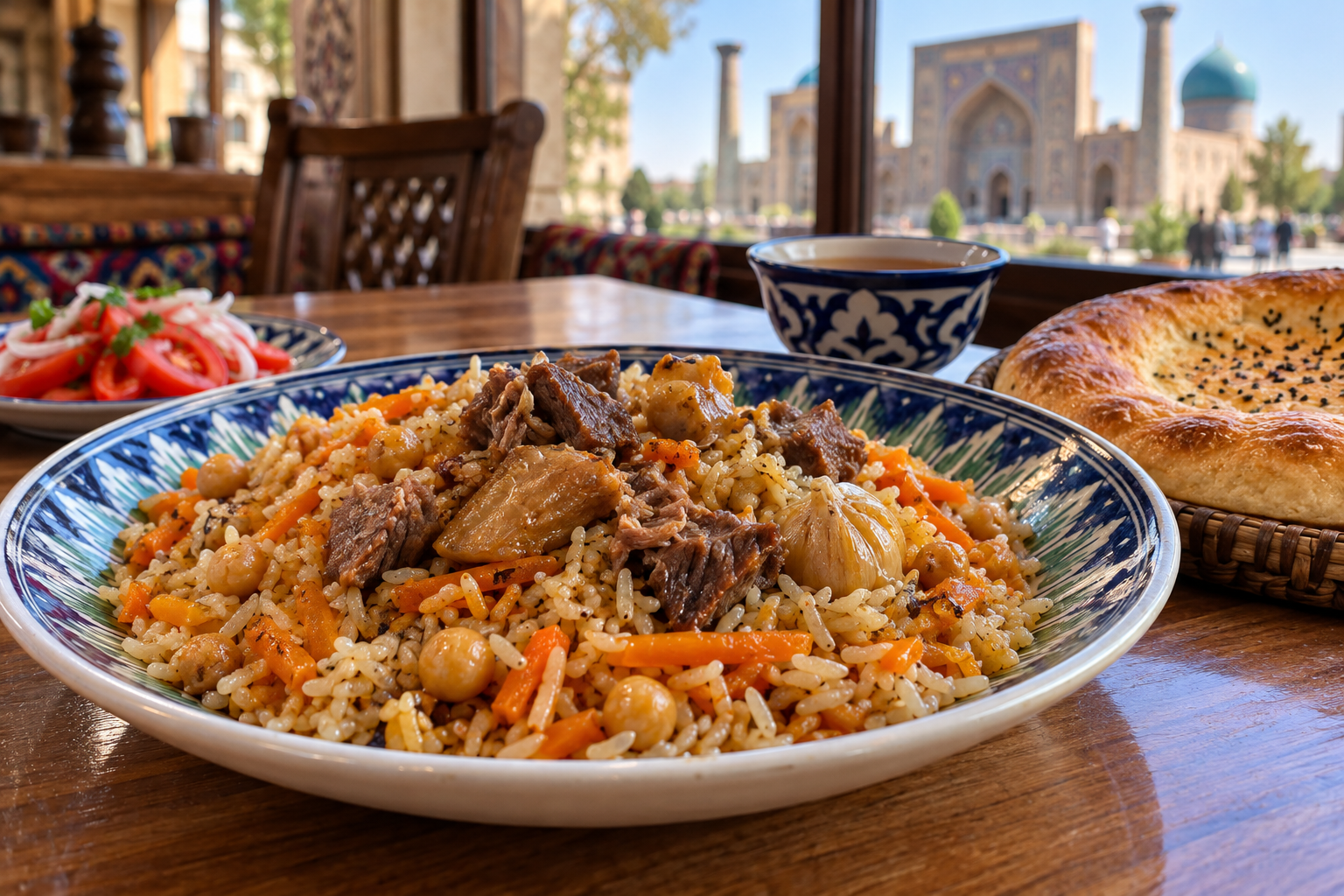
Plov gives the day a satisfying center: rice, carrots and meat brought together in a dish that varies across Uzbekistan. Samarkand’s version is known for cooking the components in layers. On your plate, it is an invitation to settle in rather than keep moving.
Ask your host or a local guide for a busy place serving it fresh, and confirm when plov is available. Order a sensible portion, add tea and a simple salad if you like, and ask about ingredients if you have dietary needs; meat stock and animal fat may be part of the preparation.
Let lunch run a little longer. Bread gets passed, tea gets poured and the conversation needs no grand subject. A city remembered only for its buildings would be missing one of its best chapters.
Finish Beneath Gur-e-Amir’s Turquoise Dome
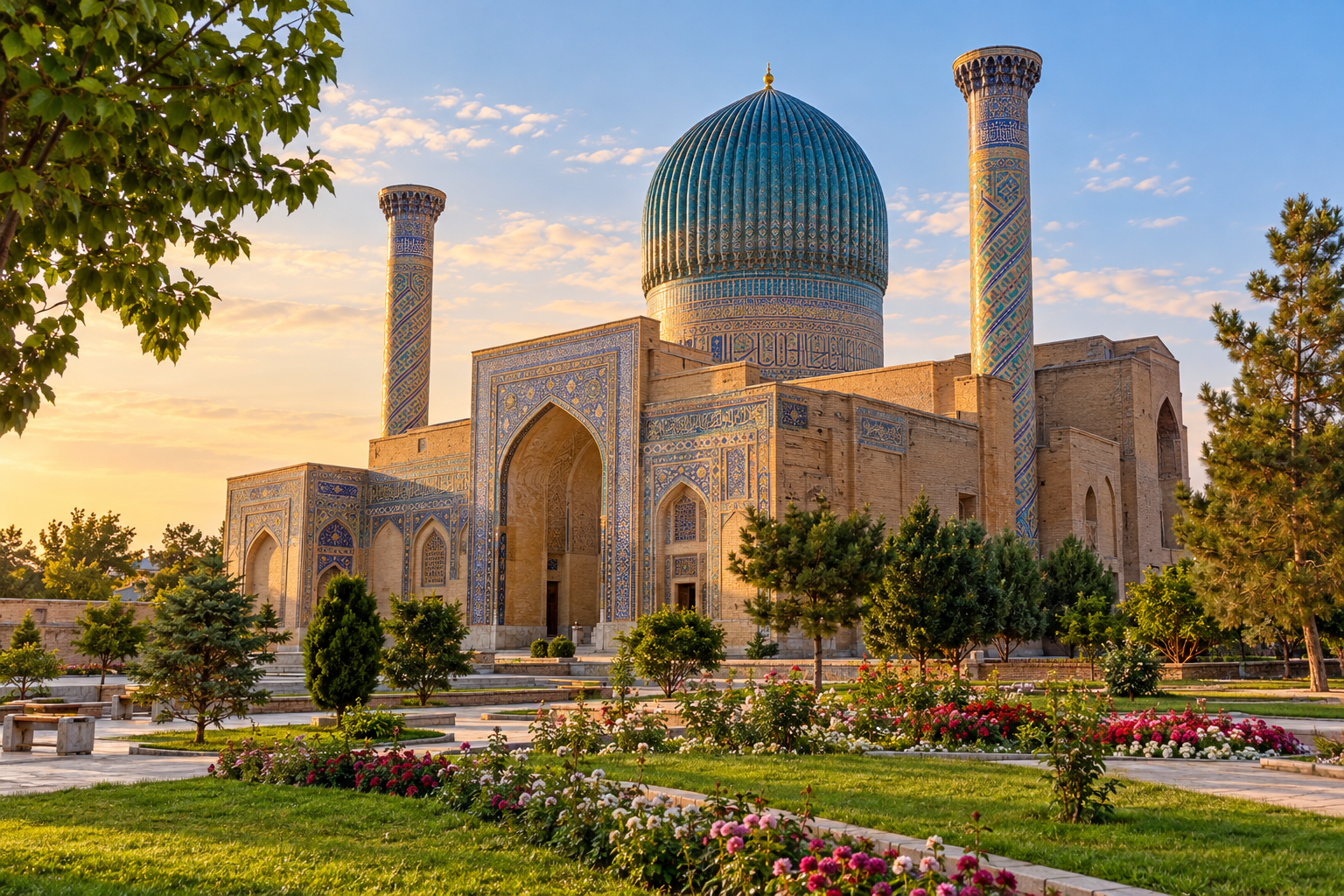
Gur-e-Amir closes the route with a different kind of presence. Its ribbed turquoise dome rises above the mausoleum associated with Amir Timur and members of his family. After a day of markets and meals, the approach feels like an invitation to slow your pace again.
Visit during confirmed opening hours and follow the rules inside. The monument is beautiful, but the people commemorated here belong to a complicated history of power and conquest. A thoughtful guide can hold both the artistry and that history in the same conversation.
Finish with an easy dinner or another look at Registan from the public square. Samarkand has spent the day showing you what it can build. The best ending is smaller: a cup of tea, tired feet and the feeling that you gave the city enough time to surprise you.
Three Days in Samarkand
Balance the great monuments with bazaar browsing, a proper plov lunch and time to return to your favorite view.
Registan & Gur-e-Amir
Explore Registan with time for its courtyards, pause for lunch, then visit Gur-e-Amir. Return to the square toward evening if you wish.
Shah-i-Zinda, Bibi-Khanym & the Bazaar
Begin at Shah-i-Zinda, continue to Bibi-Khanym and browse Siyob Bazaar. Use a short taxi ride when useful and take a shaded tea break.
Plov & a Second Look
Plan a fresh plov lunch, revisit the tilework you loved most, and leave the afternoon flexible for a guide-led walk or relaxed souvenir shopping.
Build Your Samarkand Trip
Everything you need to plan, book and enjoy your Samarkand escape.
Search flights to Samarkand
EXPLORE →Find hotels in Samarkand
EXPLORE →Book top experiences
EXPLORE →Travel Essentials
SEARCH ESSENTIALS →ⓘ As an Amazon Associate I earn from qualifying purchases.
A Few Things Worth Knowing in Samarkand
Greet people with “Assalomu alaykum” and say “rahmat” for thank you. Dress modestly at religious sites, follow requests about head coverings or shoes, and ask before photographing people. Keep voices low around tombs and worshippers.
Check restaurant bills for a service charge before adding a tip. A small extra amount for attentive service is a kind gesture. Agree on a guide’s or driver’s price beforehand and ask your accommodation about local tipping expectations rather than assuming a fixed percentage.
Buy monument tickets through official points or reputable operators. Confirm the full taxi fare before setting off, and clarify what a guide’s offer includes. You can decline unsolicited help politely. Keep bags zipped in busy markets and count change without rushing.
The currency is the Uzbek som; carry small notes for market purchases and confirm card acceptance. Bring water, sun protection and shoes suitable for steps and uneven paving. Check current opening hours, entry requirements and transport details before traveling; leave room for heat breaks.
Spend on the things that make the visit richer: a knowledgeable guide, a fresh lunch or a piece of craft you truly like. Leave a little space between the big sights. Smile, stay curious and enjoy yourself; Samarkand does not need a rushed itinerary to be unforgettable.
Samarkand was only one wrong turn.
There are plenty more. Choose another Trax5 story and see where you end up.